Every town and village on the Isle of Wight towns and villages, from Alverstone to Yarmouth — what each place is known for, where it sits, and how they fit together. Use the letters below to jump, or start with the nine towns.
Jump to: A · B · C · E · F · G · H · L · M · N · P · Q · R · S · T · V · W · Y
The Nine Towns at a Glance
Exploring the Isle of Wight Towns and Villages
Newport — County town, shops, services. Centre of the Island, on the River Medina.
Ryde — Victorian seafront, long pier, fast links to Portsmouth. North-east coast.
Sandown — Wide sandy bay, dinosaur fossils. South-east coast.
Cowes — Sailing and Cowes Week. North-west, on the Medina mouth.
Shanklin — Shanklin Chine, Old Village, beach. South-east coast, next to Sandown.
East Cowes — Osborne House, Queen Victoria’s home. North coast, across the Medina from Cowes.
Ventnor — Sheltered south-facing bay, botanic gardens. South coast, in the Undercliff.
Brading — One of the Island’s most historic small towns. East, just inland of Sandown Bay.
Yarmouth — Tiny, castle-guarded western gateway. West, where the Lymington ferry arrives.
The Full A–Z
A
Alverstone
What is it known for? A quiet village in the Eastern Yar valley, popular with walkers who follow the stream towards the coast.
Where is it? East of the Island, between Newchurch and the Alverstone Garden Village.
Arreton
What is it known for? An old central-Island village with a fine parish church and a craft centre housed in old barns (Arreton Barns).
Where is it? Just off the Newport–Sandown road.
B
Bembridge
What is it known for? The Island’s largest village, at the eastern tip: a harbour with a lifeboat station, sandy spots at Whitecliff Bay, and the chalk hump of Culver Down on its doorstep.
Where is it? The far east of the Island.
Binstead
What is it known for? A quiet shore-side village between Ryde and Quarr.
Where is it? North coast, just west of Ryde.
Bonchurch
What is it known for? A sheltered, garden-heavy hamlet below the landslip; its Old St Boniface church is among the Island’s oldest, and Charles Dickens stayed here while working on David Copperfield.
Where is it? Between Shanklin and Ventnor.
Brading (TOWN)
What is it known for? One of the Island’s most historic small towns, with a characterful old centre (the Bull Ring) and Brading Roman Villa — famous Roman mosaics — at Morton nearby.
Where is it? Inland of Sandown Bay, on the Eastern Yar.
Brighstone
What is it known for? Largely unspoilt thatched-cottage village in the south-west, a short walk from the coast at Grange Chine.
Where is it? South-west, inland of Brighstone Bay.
Brook
What is it known for? A small south-west village beside Brook Bay, on the old Military Road coast route.
Where is it? South-west coast, between Brighstone and Atherfield.
C
Calbourne
What is it known for? Its water mill and mill pond — one of the Island’s classic working-mill visitor stops.
Where is it? West-central, on the Newport–Freshwater road.
Carisbrooke
What is it known for? Carisbrooke Castle — where King Charles I was imprisoned — and its medieval donkey wheel in the castle well-house.
Where is it? Immediately west of Newport.
Chale
What is it known for? A downland-edge village beneath St Catherine’s Down, close to Blackgang Chine; the medieval “Pepperpot” oratory (St Catherine’s Oratory) stands on the down above.
Where is it? South-west coast.
Chillerton
What is it known for? The tall transmitter mast on Chillerton Down, a central-Island landmark you’ll spot from miles away.
Where is it? Central-south, in the valley between the downs.
Cowes (TOWN)
What is it known for? Sailing — Cowes Week draws the yachting world — plus the chain ferry (“floating bridge”) across the Medina to East Cowes and the fast ferry to Southampton.
Where is it? North-west coast, at the Medina’s mouth.
E
East Cowes (TOWN)
What is it known for? Osborne House, Queen Victoria and Prince Albert’s seaside home; also a working port with the Southampton ferry.
Where is it? North coast, across the Medina from Cowes.
F
Fishbourne
What is it known for? Being the Island’s Portsmouth ferry gateway, set on a sheltered creek.
Where is it? North coast, between Ryde and Wootton.
Freshwater
What is it known for? The main village of West Wight, by Freshwater Bay beneath Tennyson Down; Alfred Tennyson lived at nearby Farringford and pioneer photographer Julia Margaret Cameron worked at Dimbola Lodge.
Where is it? The far west.
G
Gatcombe
What is it known for? A small village in a wooded valley off the main road.
Where is it? Central-west, in the Medina’s hinterland.
Godshill
What is it known for? Picture-book thatched cottages around a medieval church on a knoll — a local legend says the church kept moving up the hill, giving the village its name — plus its beloved model village.
Where is it? South-central, on the Newport–Ventnor road.
Gurnard
What is it known for? A calm, seafront village just west of Cowes, with the Gurnard Luck stream at its mouth.
Where is it? North coast.
H
Havenstreet
What is it known for? Home of the Isle of Wight Steam Railway, where heritage trains still run through the countryside.
Where is it? North-central, between Ryde and Newport.
Horringford
What is it known for? A scattered rural settlement among lanes and farms.
Where is it? Between Apse Heath and Rookley.
L
Lake
What is it known for? The seafront stretch that fills the gap between Sandown and Shanklin’s bays.
Where is it? South-east coast, on Sandown Bay.
Luccombe
What is it known for? Quiet cliff-side lanes above Shanklin and its own small chine.
Where is it? In the Undercliff, just south of Shanklin.
M
Mottistone
What is it known for? National Trust manor and gardens, with the mysterious Neolithic Longstone standing on the down above.
Where is it? West Wight, near Brighstone.
Moortown
What is it known for? A tiny farming hamlet between Brighstone and Brook.
Where is it? South-west.
N
Nettlestone
What is it known for? A quiet village adjoining Seaview, with Nettlestone Point at the shore.
Where is it? North-east coast.
Newbridge
What is it known for? A small village set above the winding creeks of the Newtown estuary.
Where is it? North-west.
Newchurch
What is it known for? A parish village on the Eastern Yar valley road, handy for exploring the east of the Island.
Where is it? Between Newport and Sandown.
Newport (TOWN)
What is it known for? The county town and the Island’s centre of gravity — shops, buses, the Guildhall on the quay — with Roman remains found in the town and Carisbrooke Castle on its western edge.
Where is it? Dead centre, on the River Medina.
Newtown
What is it known for? One of the Island’s best stories: a medieval “new town” that never grew, which nonetheless returned two MPs to Parliament as a rotten borough; its 17th-century Old Town Hall is National Trust.
Where is it? North-west, on the Newtown River estuary.
Ningwood
What is it known for? A small roadside village among fields.
Where is it? Between Yarmouth and Shalfleet.
Niton
What is it known for? A south-west Undercliff village with St Catherine’s Lighthouse on the coast below.
Where is it? South-west coast, west of Ventnor.
Northwood
What is it known for? A village on the old Cowes–Newport road.
Where is it? North coast, near Cowes.
Norton
What is it known for? The western Yar’s mouth by Yarmouth, with Fort Victoria Country Park on the point.
Where is it? West, beside Yarmouth. (Tiny Norton Green lies nearby.)
P
Porchfield
What is it known for? A hamlet-village among north-west farmland.
Where is it? Between Cowes and Newbridge.
Q
Quarr
What is it known for? Quarr Abbey — a working Benedictine monastery with a striking early-20th-century church on the shore, where a medieval abbey stood before it.
Where is it? On the coast road between Ryde and Fishbourne.
R
Rookley
What is it known for? A village green–centred settlement on the main south road.
Where is it? On the Newport–Ventnor road.
Ryde (TOWN)
What is it known for? Victorian seaside parades, a long pier, and being the Island’s busiest gateway — hovercraft zip across to Southsea and ferries arrive from Portsmouth.
Where is it? North-east coast.
S
Sandown (TOWN)
What is it known for? A wide sandy bay, a traditional pier and promenade, and a coast famous for dinosaurs — the Dinosaur Isle museum sits by the beach.
Where is it? South-east coast.
Seaview
What is it known for? A sailing village with the Duver beach and marsh at its mouth, gentler and quieter than the big resorts.
Where is it? North-east coast, east of Ryde.
Shalfleet
What is it known for? An old church village set back from the Newtown estuary creeks.
Where is it? North-west.
Shanklin (TOWN)
What is it known for? Shanklin Chine — the Island’s most famous gorge — a thatched Old Village perched on the cliff, and a sandy beach below.
Where is it? South-east coast, adjoining Sandown.
Shorwell
What is it known for? An unspoilt downland-edge village of stone and thatch in a green valley.
Where is it? South-west, inland of the coast road.
St Helens
What is it known for? The ruined old church tower standing in the dunes — the sea claimed the medieval church — with Priory Bay beside it.
Where is it? East coast, north of Bembridge.
St Lawrence
What is it known for? A tiny settlement strung along the Undercliff road, with two of the smallest churches you’ll ever see.
Where is it? South coast, between Ventnor and Niton.
T
Thorley
What is it known for? A quiet western village by Thorley Brook.
Where is it? Just inland of Yarmouth.
Totland
What is it known for? A west-coast bay village with Totland Bay at its feet; Colwell Bay is a short walk away.
Where is it? Far west, near the Needles headland.
V
Ventnor (TOWN)
What is it known for? A south-facing town wedged into the Undercliff — Victorians came for its sheltered, almost-Mediterranean microclimate — with the Ventnor Botanic Garden and Steephill Cove nearby.
Where is it? South coast.
W
Whippingham
What is it known for? St Mildred’s church, rebuilt in the 19th century with Prince Albert closely involved, and the rural edge of East Cowes.
Where is it? Just up the Medina from East Cowes.
Whitwell
What is it known for? A quiet village in the southern chalk valley.
Where is it? Between Niton and the centre of the Island.
Wootton
What is it known for? A village on the tidal Wootton Creek, which once carried boats up to the old mill. (Wootton Bridge, the main settlement on the Newport road, is covered together with it.)
Where is it? North coast, between Ryde and Newport.
Wroxall
What is it known for? A village under Wroxall Down, with the great roofless shell of Appuldurcombe House standing nearby.
Where is it? Between Ventnor and Sandown.
Y
Yarmouth (TOWN)
What is it known for? The Island’s western gateway — Lymington ferries arrive beside a Tudor castle (Yarmouth Castle) — and with 865 residents at the 2011 census, the smallest of the nine towns. Compact, castle-guarded, characterful.
Where is it? Far west, at the Western Yar’s mouth.
Yaverland
What is it known for? Beach and old manor at the quiet northern end of Sandown Bay, under the chalk of Culver Down.
Where is it? Just north of Sandown.
Yarbridge
What is it known for? A tiny settlement at the bridge over the Eastern Yar.
Where is it? At Brading’s edge.
Smaller Places (Hamlets)
Also on the Island, too small for their own entries for now: Adgestone, Afton, Alum Bay, Apse Heath, Ashey, Blackgang, Branstone, Chessell, Chale Green, Culver Down, Downend, Freshwater Bay, Hale Common, Hamstead, Kingston, Knighton, Limerstone, Locksgreen, Merstone, Mersley, Nettlecombe, Ninham, Nunwell, Puckaster, Rookley Green, Roud, Sandford, Shalcombe, Thorncross, Upton, Whiteley Bank, Wellow, Winford, Yafford.
Isle of Wight Towns and Villages — FAQs
How many towns are on the Isle of Wight?
The commonly used count is nine: Newport, Ryde, Sandown, Shanklin, Cowes, East Cowes, Ventnor, Brading and Yarmouth. Definitions vary — some villages like Bembridge and Freshwater are bigger than some towns.
Is there a city on the Isle of Wight?
No — the Island has towns and villages but no city. The nearest city is Portsmouth, across the Solent.
What is the county town of the Isle of Wight?
Newport, right in the centre of the Island on the River Medina.
Which ferry port serves which town?
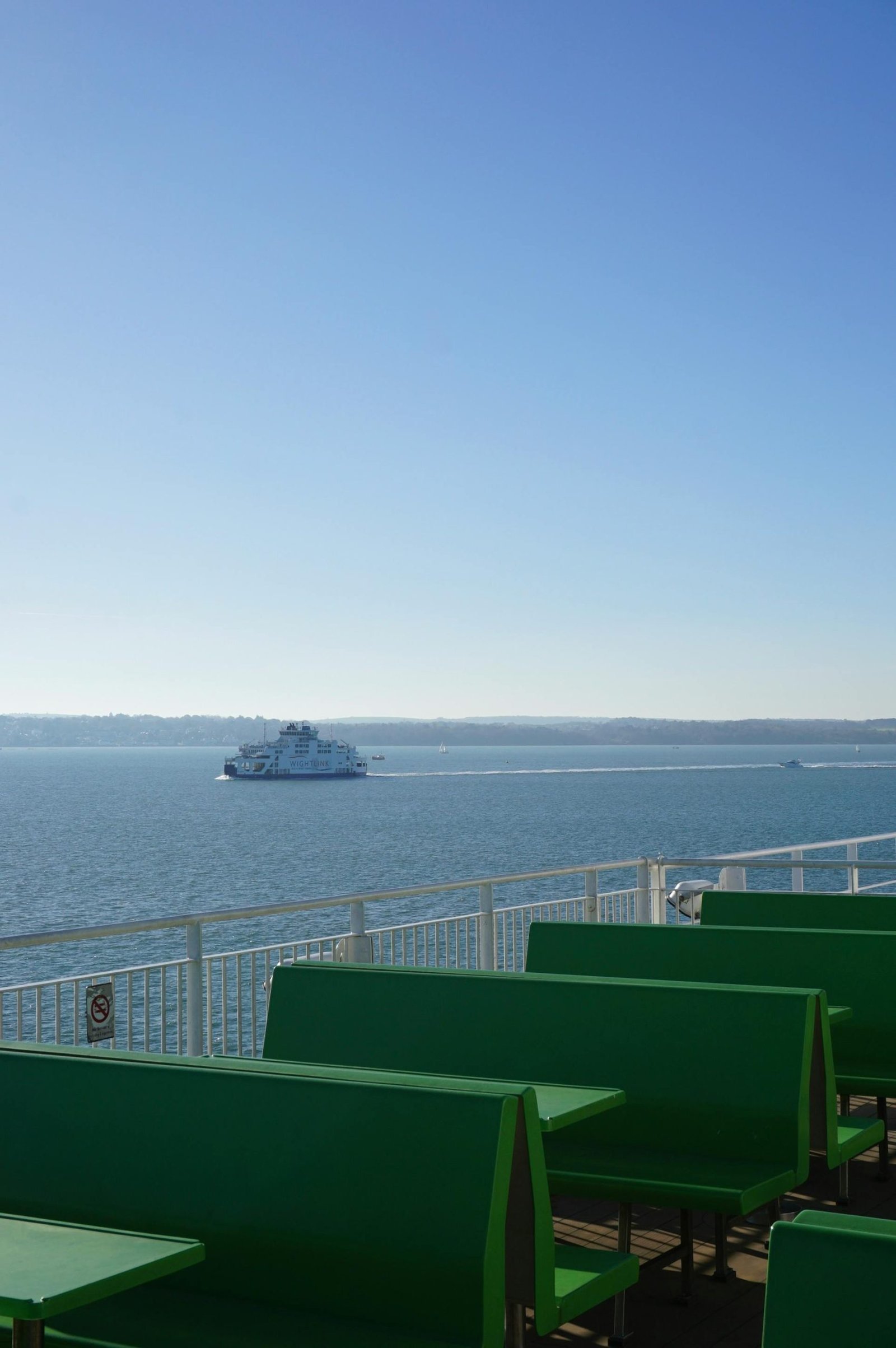
Ports sit at Ryde and Fishbourne (from Portsmouth), Cowes and East Cowes (from Southampton) and Yarmouth (from Lymington), with the hovercraft from Southsea landing at Ryde. Always check current operators and timetables before travelling, as services change.
Which is the largest and smallest town?
Newport is the largest (25,496 at the 2011 census); Yarmouth the smallest (865). We’d recommend checking the latest census figures if exact numbers matter for your visit planning.
Is there a town or village starting with Z?
No — the Island’s place names run from A to Y, not A to Z. You won’t find a Z on the Isle of Wight; there’s no I, J, O or X either. The alphabet ends at Y, and it ends well: Yarmouth, Yaverland, Yarbridge and Yafford.
Last updated: October 2026 — new guides are added here as they’re published.